From Slavery to Freedom — Washington D.C., etc.

I began my journey through history in Washington D.C. at the Smithsonian’s National Museum of African-American History and Culture (NMAAHC). The Smithsonian museums in Capital City are all free to the public, a gift that I was so grateful to accept I felt that needed to be sure not to take it in vain. I spent two full days in the NMAAHC and half a day in the American History Museum (in hopes of seeing the Sesame Street Exhibit). The muppets were gone, but there was a powerful exhibit detailing the experiences and effects of Japanese concentration camps during World War II that proved to be a valuable addition during this increasingly parallel moment in our country’s story.

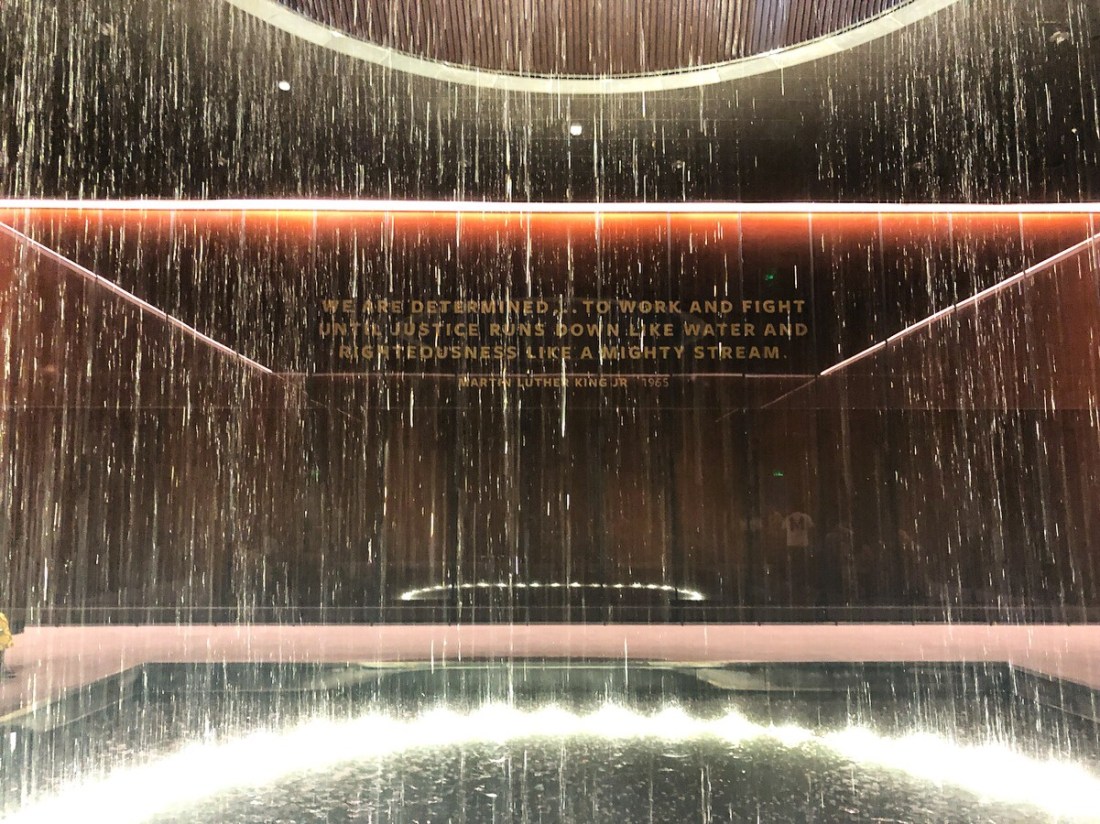
The NMAAHC is six stories— three down and three up. The bottom floors trace history from slavery to “freedom”, while the top floors honor and display the history of culture. Similar to the holocaust museum in Israel, The NMAAHC is designed in a way that visitors may truly get a taste of not just the facts, sounds and visuals from a given point in history, but also the feelings that went along with them. The bottom-most floor of the building represents slavery and is structured with low ceilings and dim lights. It’s crowded, dark and overwhelming without a tour guide. I followed a volunteer through the basement floors before walking through again on my own.

The Emmett Till memorial was designed so that visitors have to wait in a line that snakes through an entire floor of the museum, surrounded by solemn guests who squeeze past on their way to other exhibits. It would be impossible to truly mimic the experience of standing in line with strangers, wrapped around street corners in Chicago that late summer of 1955. However, the energy of the space was incomparable to anything I have felt in a room before and I wondered how it was possible that we were all still standing and breathing in it, with tears flooding and drowning our eyes.

I left the museum feeling empowered to learn more and fully plunge myself into the immersive experiences I had laid before me. The next several stops I’d planned for myself I consider to be not only an integral part of this trip, but also a significant piece of my overall journey towards self-acceptance and understanding.

I travelled onward towards Georgia first through North Carolina, where I stopped and spent a day with my best friend from home; and then through South Carolina, where I woke up along the beach– just in time to watch the sun rise over the Atlantic Ocean.

And then finally, I was ready for church.

(To be continued…)

***Photo taken at the Smithsonian NMAAHC in Washington D.C.

Liberty — Philadelphia, PA

In the spirit of feeling older and wiser, I knew that this summer I needed to plan to pursue something that has been missing from my life: honest history. I’ve always craved a deep knowledge of the past (and especially my past,) but I’ve never been any good at remembering names or dates. I’m closely familiar with myself as a visual and kinesthetic learner and so I curated a personal itinerary of tours and museums that would give me a hands-on experience of African-American history. I planned to begin with the new African-American history museum in Washington D.C. but before I descended the East Coast to begin my journey, I made a stop in Philadelphia. I wanted to see the Liberty Bell, Independence Square and most importantly, to indulge in an authentic Philly cheesesteak.

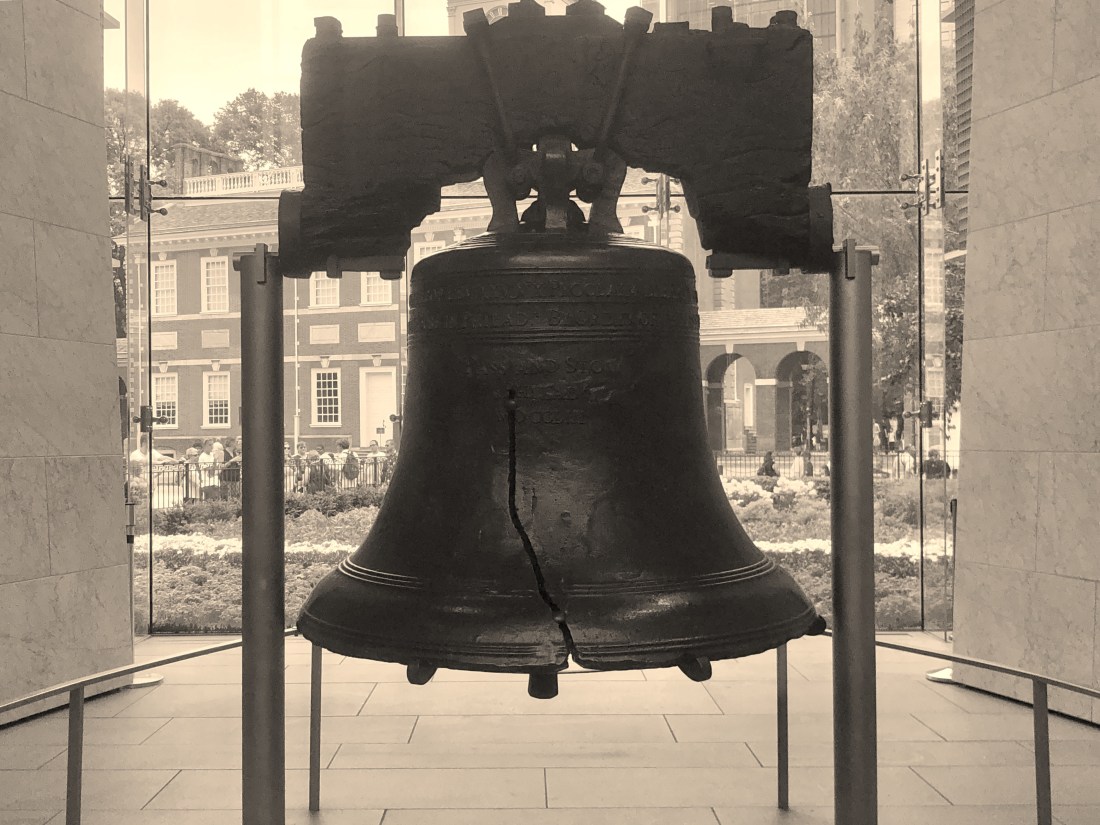
The crowd of tourists at the Bell caught me off guard, I didn’t consider that Philadelphia attracts a uniquely “prideful” type of American, and was somewhat startled to see Trump’s face plastered across gadgets, gear and apparel. Children shaded by MAGA hats and babies buttoned into matching onesies gave me chills, even though my forehead was hot and sticky from the blinding sun above. I waited behind a family donned head-to-toe in outfits celebrating their leader. At one point they squeezed another family in front of me with them, also covered in Trump paraphernalia, shooting me a smirky smile before carrying on with their boisterous conversation. When we arrived at the security entrance, every single one of the guards was a person of color and no more than a few years older than me. As I stood quietly still behind the hyped-up crowd ahead, trying not to create an impression of any kind, I made eye-contact with the man directing visitors through the metal detector. He softly smiled at me and I felt a wave of relief through his silent sympathy. And then,

“Sir, I’m going to have to ask you to step over here please.” He waved one of the men directly in front of me over to the side with his security wand. The next three minutes were fantastic. The rowdiest of the crew was patted down from his MAGA hat down to his Trump 2020 socks. When he was asked to lift his “Make liberals cry again! 2020″ shirt, exposing his stomach as proof that he was not a bomb-wielding terrorist, I nearly lost it. When the ordeal was finished, I watched him sheepishly slink off towards his family who was eagerly waiting for him to take a group picture with The Bell.

“Where are you from?” My hero waved me through the metal detector and handed me my purse.

“California.”

“Cool, I have family in California. I want to move to LA.” I smiled at him, absolutely dying to thank him for his service.

“You should! California is beautiful.”

“I think I will. Hope you enjoy Philly!”

“Thanks,” I leaned closer to look at his name tag, “Khalil?”

“Yup, and you are?”

“Elana Joy!” Khalil chuckled at the tone of excitement I tend to get in my voice when I introduce myself.

“Okay, well you have fun Ms. Joy.”

On my way out of what was ultimately a pretty anti-climactic tourist attraction (with the exception of the excitement at its entrance,) I found another security guard and asked him where to get the most authentic cheesesteak in town. He directed me to a place in South Philly called Gooey Louie’s and I made my final and most delicious stop before carrying on with my itinerary.

As I drove away, I wondered if I was wrong for my pettiness at the Liberty Bell. In the moment it had felt like resistance and a tiny win. Especially in knowing that there was an unspoken alliance between me Khalil— in a way, he had stood up for me in humbling the wild man. I decided to temporarily put it behind me and make an effort to fully emerge myself in the learning experiences I’d laid out for the next week. If there’s one thing I’ve learned to honor on this trip, it is the importance and value of moving forward. Rather than think about whether or not it was right for that man to be made a mockery of, I can focus on understanding the many ways oppressed people have chosen to rise up against hate and prejudice in the past so that next time, I’ll know better. History is notorious for its repetition.

For now, I won’t be ashamed in saying that it was hilarious.

**Photo taken at The Liberty Bell in Philadelphia, PA

Illuminated — A memory from South Dakota

I drove across the Colorado border with just a quarter tank of gas. Usually I stop and refill before it gets below the halfway mark, but the state of absolute shock I was in upon finding the landscapes of Nebraska and South Dakota to be completely blanketed in wildflowers pulled me away from my senses for long enough to forget. By the time I noticed the illuminated gas light on Vanna’s dash, I knew it was too late and I would never make it to the next big town, 22 miles away. I cursed the beauty of the soft, yellow fields speckled with moments of greens, purples, and hot summer pinks; beauty has such a practice of making a person forget which way to order their priorities.

Then seemingly out of nowhere, like a mirage, an old building with the words GAS/FOOD painted on its side facing the highway appeared. I felt that I couldn’t be certain it was real, but a sudden exit and sharp turn led me right up to it and I breathed a sigh of relief as I parked and got out of my car, facing the proof of my reality.

Unfortunately, I quickly realized that there was definitely no gas in the pumps and that there probably hadn’t been for years.

I looked around helplessly, trying to calculate in my mind the likelihood of Vanna and I making it to the next town. And then, if we didn’t make it to the next town, the length of time I’d be waiting for a tow truck to come. And then, I attempted to calculate what would happen if the person in the tow truck wasn’t happy to see a black girl with California plates in the middle of a red state. The worry train in my mind was going at full speed and I could feel tears pricking at the corners of my eyes, begging to fall. Those carousel thoughts that plague us all at times began to tell me I was stupid, careless, and maybe not as built for this experience as I had initially believed myself to be. But I’ve always been too stubborn and prideful to give up, which is either a blessing or a curse, depending on what I am attempting to do.

I was surprised to hear the sound of laughter and followed it to a set of tall, carved wooden doors. The echo of a collection of chortles, chuckles, and hee-has derailed my thoughts long enough for me to make a move. I wrapped my hand around the cold metal moose-head door handle. The antlers made it so my fingers spread into an awkward claw, my breath felt caught in my chest, and not-the-good-kind-of butterflies fluttered up from my stomach into my throat and began to choke me. I pulled one of the doors open and behind it’s heavy mass sat seven white faces and a white woman behind the bar. It was exactly what I expected to walk into and yet, it still made me nervous.

“Hi um, can y’all tell me where the gas station is?” My voice came out shaky and those damn tears were still fighting against me. A tall, thin man with shoulder-length grey hair, a thick mustache, and a strangely familiar face stood and looked me up and down.

“You’re shit outta luck in this town.” The tears finally won their battle and marched right out of my eyes and down my cheeks like hot soldiers pumped up with the emotions of victory and the price paid for it.

“Don’t worry, come on now. Don’t you worry. Is your gas light on?”

“Yes,” I felt so foolish with my red eyes and puffy lips, “and I don’t know how long but I’ve driven at least 20 miles since I noticed it.”

A blonde woman, the only other woman in the bar besides the plump bartender looking on from behind the old wooden counter with an air of indifference about her, smiled at me.

“Oh, I bet you could make it sweetie! I almost run out of gas all the time! But now I know exactly how far I can go once that light turns on!” She broke into a laugh that nobody joined into. The tears incessantly fell from my face and were beginning to slide down my neck, which was already sticky with sweat.

“I really don’t think I can make it, I’m scared I’ll get stuck.” The tall man still seemed to be analyzing me, attempting to understand exactly what was happening.

“I really think you’ll be fine. Just go on ahead and try—“

“I’ll go get you some gas.” We all turned our heads towards the low, raspy voice. A man who had been sitting silent in the corner, wearing a white t-shirt and khaki pants stood and pulled his keys out of his pocket.

“You will?”

“Uh-huh. Be right back, y’all.”

He pushed open the heavy door and sunlight rushed into the room, brightening our faces. It slammed behind him with a thud and we were left with our jaws open and unblinking eyes. A shorter, younger man with a large body broke the silence.

“So what the hell is a girl like you doing in little ol’ Pringle, South Dakota?”

I wiped the tears off of my face and told the group about Vanna and my trip.

The large-bodied man appeared to be amused by my explanation.

“Well honey, you sure ain’t in California anymore! You in Trump country now!”

I laughed nervously.

“Oh hush, Jimmy!” The blonde woman playfully slapped his arm.

“What now, darlin’? I’m just tellin’ her like it is!” And then to me, “You don’t believe in this global warming bullshit now do ya?” The woman slapped him again, a little harder this time.

“Don’t listen to my husband, he’s just giving you a hard time.”

“It’s okay,” I hoped we could find something else to talk about. “I wanted to travel this country because it’s easy to come up with ideas about people who think differently than me, when I really don’t know them at all. I guess I’m trying to let go of preconceptions.” The blonde woman really liked that and smiled at me, nodding her head in agreement. “So…is this where Pringles chips were invented?”

The people laughed and the air felt lighter. The tall man began to tell me about how he spent a majority of his teenage years in the Bay Area. We spoke for a moment about Berkeley (he was a student at Berkeley High School’s West Campus), San Francisco and even Richmond. When I asked him how he ended up so far away he said,

“Who knows, I been here so long now.”

Our conversation ended abruptly when the door swung open to reveal the silhouette of the khaki man holding a gas can and sunlight once again spilled over our faces.

“Come on now, show me where you parked.” I jumped out of my seat a little too enthusiastically and the blonde woman followed me as I led him to Vanna. She was beautiful and had a face so warm, she could have been one of my grade school teachers. As the man poured gas into my tank, I dug through my backpack for a ten dollar bill I remembered tucking away earlier that morning.

“Thank you so much, I can’t even describe how grateful I am. Can I give you some money for all of this?”

“No.” The man tightened the gas cap and snapped the little door shut. “Alright, this should get you to town. Keep an eye on your tank now, ya hear?”

“Yes sir, thank you, I will.” The blonde woman was smiling so big that I thought her lips might separate from her teeth and fly away. She gave the quiet khaki man a hug and I could hear her whisper in his ear, “Thank you for helping her.” I shook their hands and opened the car door.

“Come back and visit us someday, okay?” The blonde woman looked me right in the eye with so much kindness it nearly knocked me to the ground.

“Okay, I will.”

“And don’t trust anyone.”

I couldn’t help but laugh at the irony of her statement.

“I’ll be safe. Thank you so much again, I will never forget this.”

She kept smiling at me as I pulled out and I saw the two of them walk back inside together. The freeway entrance curved around and as I merged into the flow of traffic, I saw a sign on the top of the building that I hadn’t noticed when I first pulled up:

HITCHRAIL BAR AND RESTAURANT

This experience has stayed close to my heart and vivid in my mind since it happened in the third week of this journey. It still confuses me that people who I wouldn’t expect to care about somebody that looks or thinks like me showed so much empathy and unfiltered compassion. I’ve spent an incalculable amount of time wondering what it means to be a “good” person, and now I really don’t know.

My favorite concept in Judaism is that of the mitzvah— doing what’s right and good because it’s right and good. Not for the purpose of getting into heaven or avoiding hell, not in search of praise or special treatment, but just because it’s how we are meant to treat each other.

This is how I want to live, this is the type of energy I want to put into this world.

I never thought a group of Trump supporters could teach me anything about truly caring for other people and yet, they did.

I realize I was lucky.

I realize that their views and decisions in the voting booth are likely oppressive to me and most of the people in my life.

But I also realize that they were kind and concerned about my safety. I probably won’t find myself in Pringle again any time soon, but I will definitely be sending them a postcard.

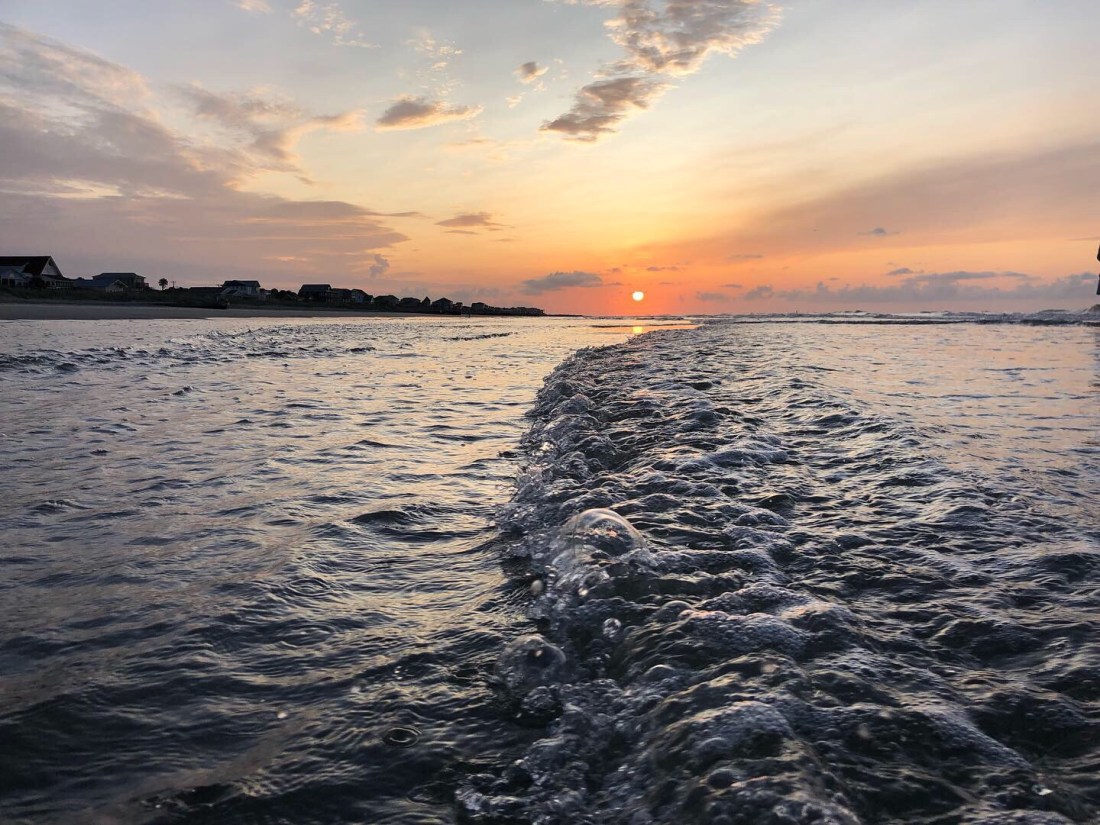
*** Photo taken as the sun rose over Folly Beach in South Carolina.

Oh, Canada — Ontario

“Hey, I found pepper spray!” the Canadian Border Patrol officer signaled to his colleague, who proceeded to lock stiff handcuffs around my wrists.

“You are under arrest for attempting to smuggle illegal weapons into Canada.”

“Oh shit.” I was overcome by a flash of heat so intense that it almost brought me to my knees. My top three concerns before going on this journey were:

1. Getting murdered

2. Getting arrested

3. Fucking up in some unforeseen fashion and having to come home early

When I realized that number two on the list was really happening, my whole trip up until that moment, really my whole LIFE up until that moment, began flashing before my eyes. It was incredibly dramatic. However, to those who have been in American jail, rest assured that Canadian jail is comparably a walk in the park. Not on a sunny day, because it’s still jail—but a walk in the park on a day with extreme weather, like a frozen Mid-West winter or muggy East Coast summer. After reading me my rights and assuring me multiple times that they are not like the officers on “the OTHER side”, my handcuffs were unlocked and I was led to the tiny jailhouse portion of the Canadian border. The “cell” they put me in while they searched the rest of Vanna for additional contraband was an empty 10×10 room with one wall made up mostly of those glass window tiles that are beautiful when the sun is shining through them, even though you can’t see what’s on the other side. Despite the aesthetically pleasing differences and far more compassionate tone of the officers, I was still losing my mind. I paced around the room for a few minutes before the voice of an old yoga teacher I had (who I credit in helping me to truly build a relationship with the practice,) floated into my head.

“In this moment, let go of what has already happened. Breathe it out. Focus on what is happening right now. Breathe it in.”

The “cell” was surprisingly clean and I figured I may be going to Canadian jail for the rest of my life anyway, so I sat cross-legged on the floor and began a meditation that would ultimately lead me into one of the most grounding flows I’ve ever experienced. Mid-downward dog, the metal door clicked and then creaked open and the officer who had put me in handcuffs signaled for me to stand and follow him. He told me that I wasn’t being charged with any crime, but I had to pay a fine for forgetting to claim my stupid pepper spray. Note to self: pepper spray IS mace! I couldn’t believe that Number two had happened as a result of my fear of Number one, but I was incredibly relieved that Number two hadn’t happened on “the other side” and then resulted in Number one. I swiped my credit card and paid the fine and a female officer joined the man who had been dealing with me.

“Aw, don’t cry honey. I really don’t think you meant to cause any trouble. At least it didn’t happen over there!” She waved her hand in the general direction of the USA.

“I know.”

“And at least you’ll have a good story to tell your friends back home!”

“I do love a good story.” I was mostly grateful to be reunited with Vanna.

“So,” the male officer and female officer gave each other an amused look, “do you still want to come into Canada?”

It was impossible not to laugh.

“Yes, I do.”

Canada was beautiful. Driving along the backroads I found myself surrounded by vast farmland and then suddenly rows of trees with a type of diversity amongst them that I had previously only ever seen in upstate New York. I enjoyed two nights of sleeping in fancy, well-lit and fully staffed rest-stops equipped with WiFi, 24-hour restaurants and gas pumps (where gas is sold by the liter!) I was constantly amazed by how different things can feel on the other side of a non-existent line. Brand names and license plates were surprising enough, but to see the differences in how people interact with each other was a whole new experience.

I went to a local supermarket chain called Zehr’s to pick up some basic groceries before crossing the border back into New York. The woman behind the cash register seemed to be humored by my infatuation with Canada.

“Don’t fool yourself sweetie, not everybody is so nice.”

“I can imagine.”

“But everybody can go to the doctor when they get sick. Ha ha!” She flashed me a toothy smile and I awkwardly shot one back.

“Ha…”

Oh, Canada.

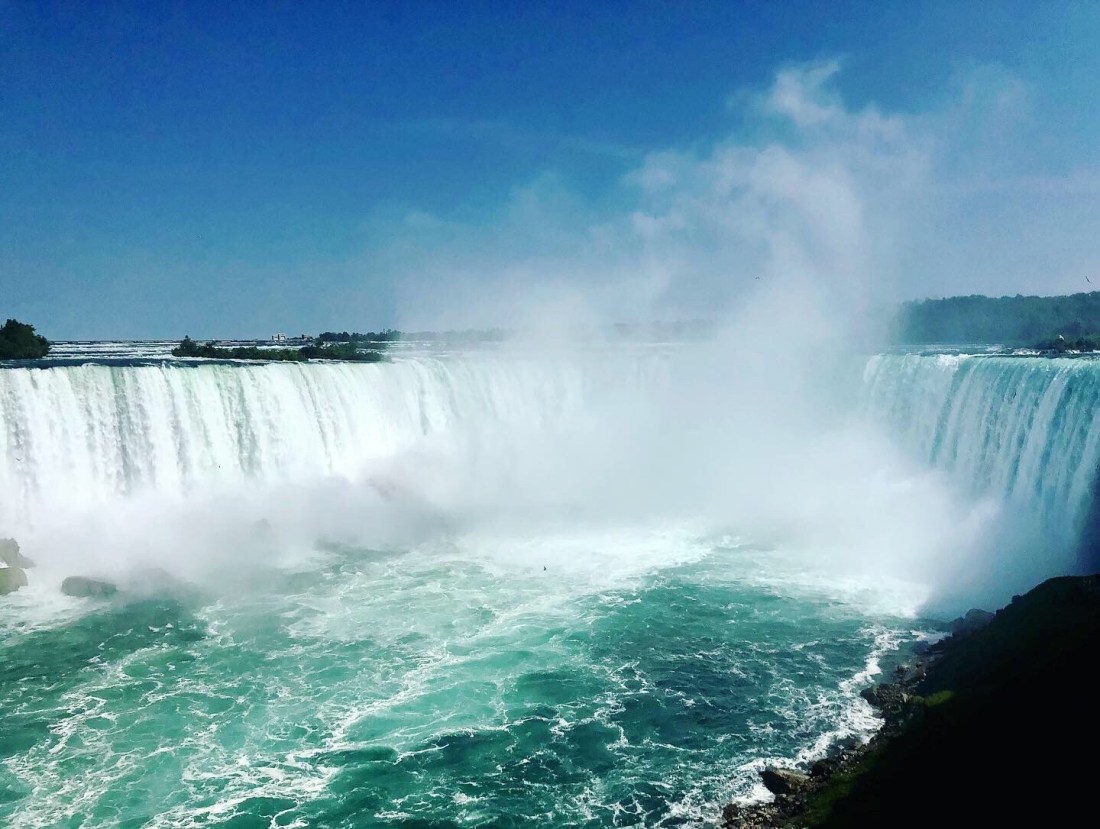
***Picture taken at Niagara Falls in Ontario, Canada

Brick Buildings — Chicago

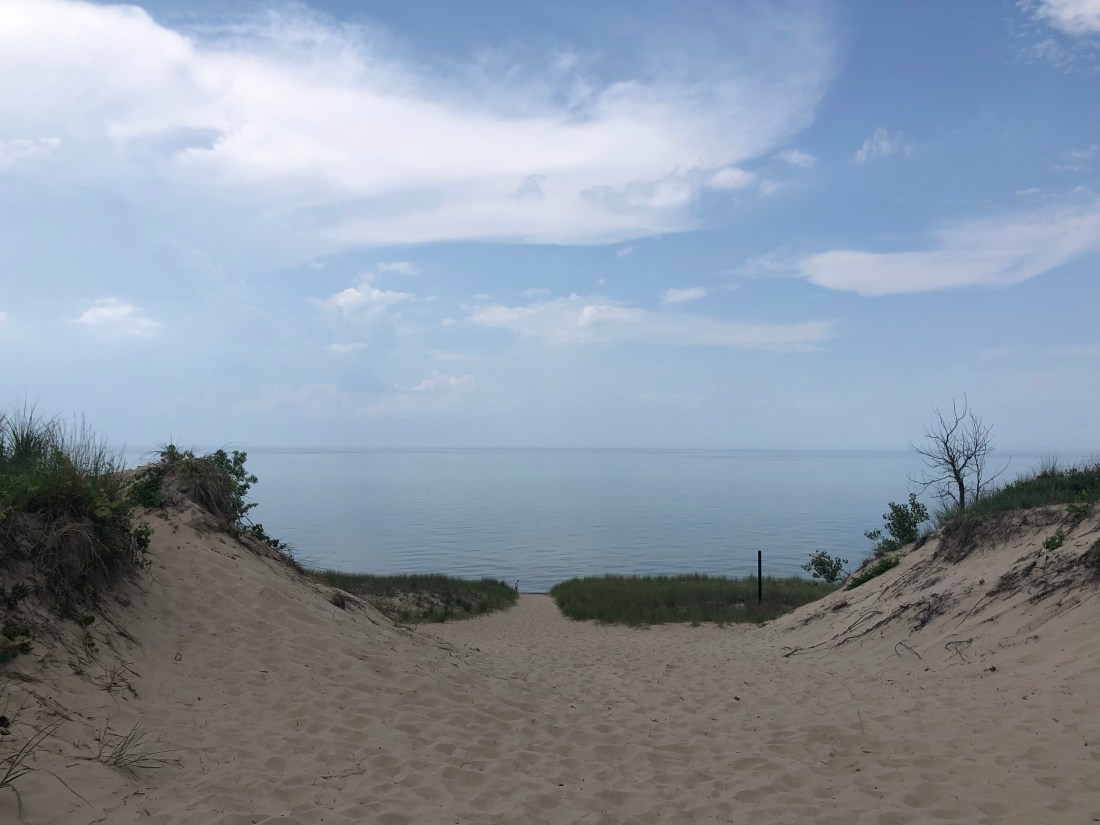
Chicago for me was everything that I imagined it to be, based on the countless stories I’ve read that have taken place there. Brick buildings dotted with white window frames and porches tucked under awnings in the front or perched atop wrap-around staircases in the back sit nestled against one another on streets in rows and columns like a grid. Vines that climb along hot red bricks towards rooftops remind me of my own stories in the ways that they cling and grow and constrain. The architecture and layout of the city was a reaction to The Great Chicago Fire– a preventative measure against future fire-related catastrophes. I find the idea of an entire city turning a tragedy into a tradition fascinating. (Although, I did just finish Morrison’s Sula, so maybe I’m preoccupied with thoughts of The Bottoms and how nearly the opposite happened there– a tradition ultimately turned into a tragedy.) Regardless, I’m not sure exactly what it was that made Chicago sing so powerfully to me. I usually feel uncomfortable around loud noises but in Chicago during the week of the Fourth of July the bangs of fireworks and crackers echoing through the streets sounded more like bass drums bumping out low, soulful beats. We spent the day lounging on the beach, and although the waves of Lake Michigan are nearly still compared to those of the Ocean, I felt swept away by the sultry sunshine of the day and then washed back ashore by the steamy, starless night.

I know my storybook romanticization of Chicago comes from a place of privilege. I have no idea what it’s like to truly be there. The cold winters that lock people inside for days and turn peaceful snow into violent, dirtied clumps of ice on sidewalks really don’t sound like my cup of tea. My memories of Chicago will be those of a passerby soaking up the summer sun in a dazed fantasy, walking through alleys of brick buildings with an oat milk cold brew in-hand. Oh, what a scene!

Thanks, Chicago.

***photo taken at Indiana Dunes State/National Park

Manifest Destiny — South Dakota

The most striking similarity amongst all of the big cities I’ve traveled through is the large presence of active construction projects. Locals everywhere seem to echo each other in saying, “This place is nothing like it used to be.”

Always with a look of sadness in their eyes—which from experience I’d presume is a reflection of the feeling of loss and also the feeling of being lost.

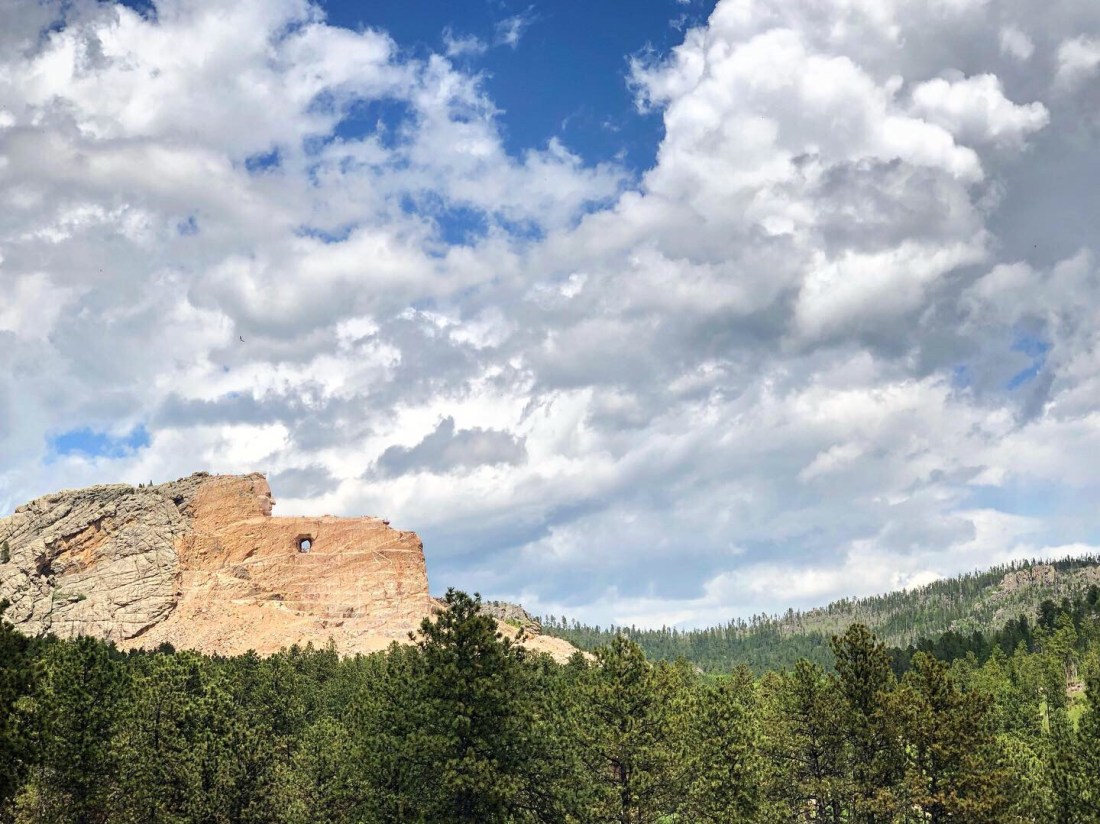
Watching the Bay Area go through the process of gentrification has meant watching families who have lived in their neighborhoods for several generations be forced to move elsewhere— somewhere unfamiliar and far less significant. This seems to be a trend across the country: young, wealthy people move into a city, strip it of its culture and vibrancy, and push out the folks who gave the place all of the characteristics that made it so desirable to outsiders in the first place. When I went to Mount Rushmore, followed by the Crazy Horse memorial in South Dakota, I realized that this is farther from a new phenomenon than any American tradition could be— this is the American way— “manifest destiny”.

When white folks stole the land we live on today from the natives who lived here, they were recorded as “pioneers” and “colonizers” in our American history books. Considering the astonishing parallels between this aspect of American history and the gentrification of neighborhoods and cities that is happening today, I can’t help but wonder if there is a more appropriate word for gentrifiers than “opportunists” or “hipsters”. I also wonder how this past decade will be remembered and whose story will be recorded this time around.

At the Crazy Horse Memorial I went to a dance performance. A native Lakota man spoke to me and other tourists about the history of his tribe and the land we were standing on. When he danced, most people sat in silence with a look of fascination in their eyes. But some, in their “Trump/Pence 2020” shirts, MAGA hats, and even more creative pieces of apparel sporting words like, “LIBERTY ISN’T FREE”, could be seen chuckling amongst themselves before mindlessly slinking off to their next attraction. The Lakota man appeared to be unaffected by the permanently smug expressions settled upon their faces, which made him all the more intriguing to me. I spoke to him after the performance and asked him if the soles of his feet hurt from dancing so hard on the concrete. His movements had been made with so much intent that they shook the floor, sending vibrations under all of us in the room.

“No, I’ve been dancing for so long that my feet barely feel anything anymore. There is no pain in this for me.” He shook my hand and then turned his attention to his grandson, who was running around the now empty room in light-up Batman shoes.

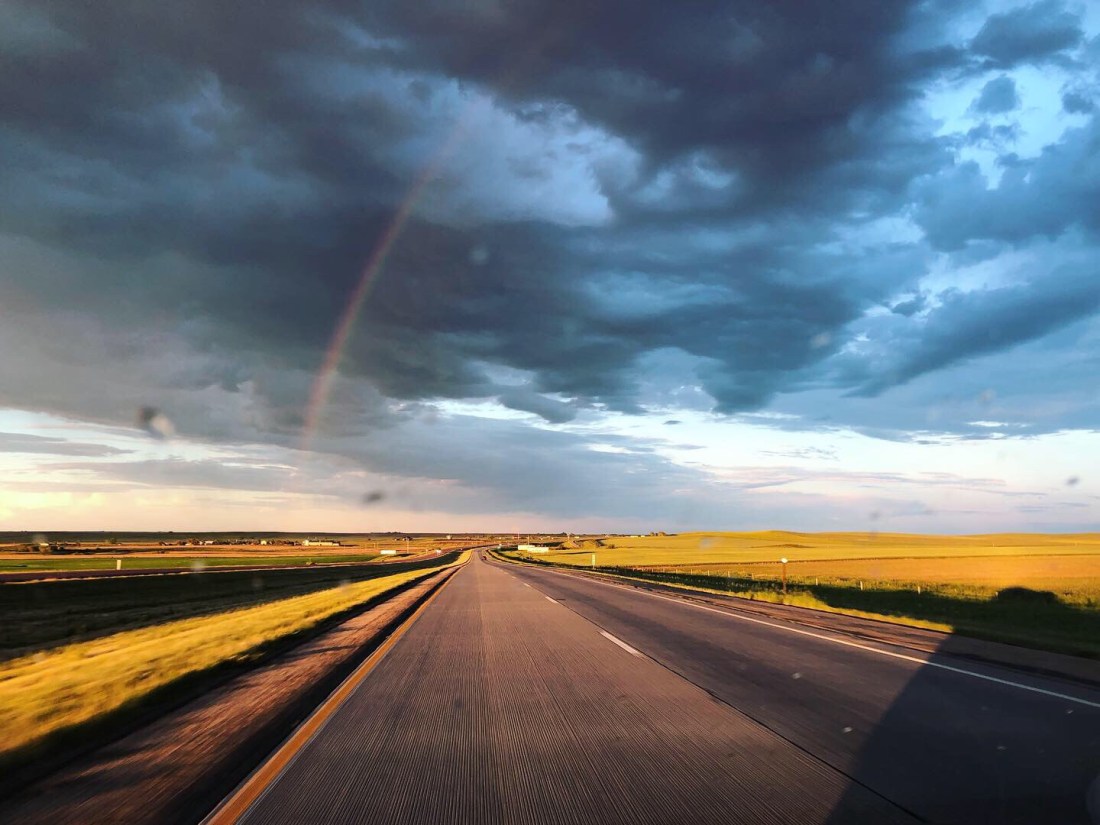
On my way out of the memorial, I went to the gift shop and bought a sticker for Vanna’s bumper and a postcard (my usual souvenirs,) before beginning my long drive to Minnesota. Just as Vanna and I made it down the twisting road that snakes away from the Crazy Horse memorial and onto the stretch of highway that would eventually lead us to Minneapolis, the sky broke open and fat drops of warm rain began to wash the thin layer of dust off of Vanna’s windshield. Storms in the Midwest are nothing like storms in the Bay Area. The clouds here come so close to the ground it feels like they are dripping down your shoulders and soaking into your clothes even before they release any droplets of water. And the rain isn’t cold and laced with sharp winds blowing off of the Pacific Ocean; it’s cool like a breeze on a hot day at the beach, when your neck is sweaty and the sand is burning the soles of your feet but you still get goosebumps because your suit is wet. This particular storm seemed to follow me for miles, or rather I was following it. Finally, the storm moved far enough away that the rain no longer struck my windshield and the dark clouds up ahead didn’t seem nearly as looming. Suddenly, the sun broke through behind me and the darkness burst into a rainbow that remained just ahead of Vanna and I until the sun set.

***Photo 1– Crazy Horse Memorial

***Photo 2– Highway Rainbow

Proclamation — Idaho/Wyoming/Colorado

“I am a writer…”

I was hoping the words would roll easily off of my tongue and into my response when my friend’s grandmother asked me,

“What is it exactly that you are doing on this trip?”

Instead, the proclamation laid thick like raw honey on my tongue, sticking to the roof of my mouth.

“I am a writer and I am focusing on my writing.”

Choppy, gooey, and heavy as stone— the words fell with little conviction.

I have always wanted to be a writer. Before I could form sentences on paper I gushed stories to my mother, who would listen with a thoughtful ear. She often asked me questions about my characters and always encouraged me to tell her more. When I was confident enough in my ability to write, she gave me my first journal. It was powder pink and had a white kitten wearing a fuchsia tutu on its front cover. A pair of ballet slippers were printed on the back, their laces wrapped around the book and then twisted to frame the ballerina kitten posed in a passé on the front.

“Now, you can write your stories in here.”

I wrote my first story called “The Wild, Wild West” in that journal while riding in the backseat of our bright red 1987 Mazda. (I promise to post a copy of this artifact when I return home.)

I have kept a journal from then until now—21 years of hand-written sentences pressed between hundreds, maybe thousands of pages of lined paper are organized into books and stacked (somewhat) neatly in a box on top of a closet in my mother’s house.

I have always wanted to be a writer but have never been truly certain of what it means “to be a writer”? Or maybe what I have felt uncertain of is what it takes for one to say with conviction that they are a writer and whether or not I will ever have it.

If I write every day, can I say that I am a writer?

What if I write every day but I don’t have a degree, can I still say that I’m writer?

What if I get a degree but my grammar still sucks?

What if I publish a book but nobody reads it?

What if everybody stops reading books and my story is forgotten?

What if everybody starts writing books and my story gets lost?

What if I always only think I am a writer but never know for sure?

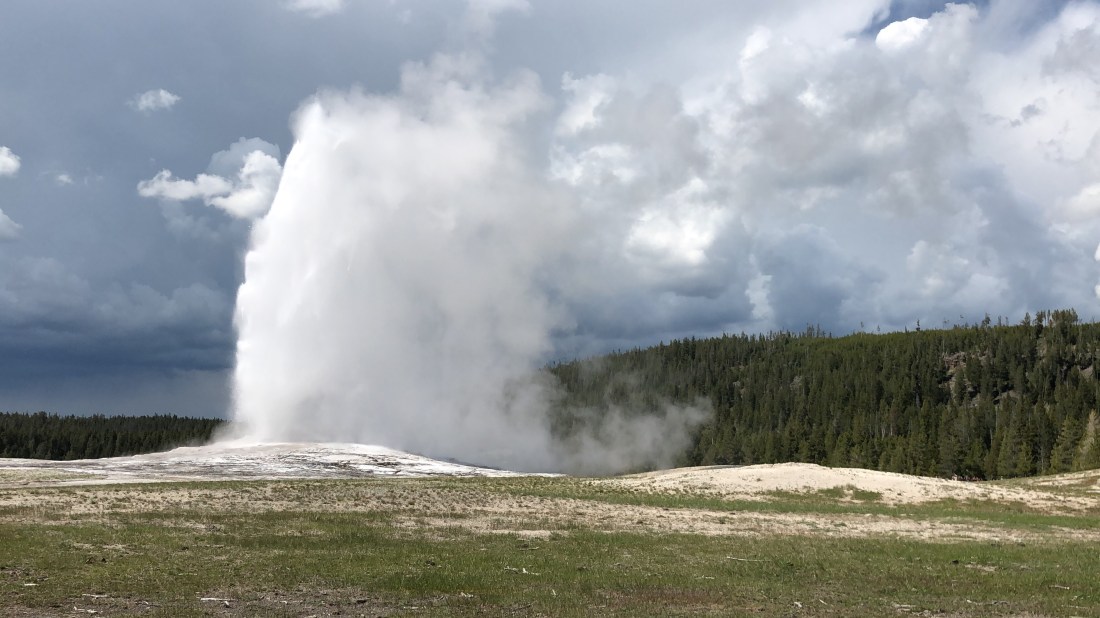
My mother joined me on my journey for a week and we drove through Idaho, into Yellowstone National Park and across Wyoming to Colorado. Sharing such a small space with her made me realize how much my goals and values have been influenced by our relationship. My passion and drive for taking chances are a result of her undying belief in my success.

This morning, we said our temporary goodbyes in the car on the way to the Denver airport.

“I just want you to know that I hope the rest of your trip is everything that you want it to be and that you get to write and do all of the things you imagined yourself doing.”

“Thank you mommy. I just want you to know that I appreciate you supporting me in almost everything I do.”

“Yes, almost. You’ve made some crazy choices.”

“I know, that’s why I said almost.”

Nothing can compare to or describe the closeness between my mother and I. It’s deep and special and one of the most beautifully intricate things in my life. As I drove away from the airport it became strikingly clear that I am here because of her and what she has given me. I know that I am incredibly lucky. In the same way that she inspired me to first put my stories on paper and made them feel so important, my lack of certainty in what it means to be a writer has been shaken away by my sureness of my mother’s belief in me.

I am a writer and I am here to focus on my writing.

**Photo taken at Old Faithful in Yellowstone National Park

Why An Eagle? — Washington

I started this journey with many assumptions. I knew before I left that I would be wrestling with preconceived notions of all of the places in the country where I haven’t been and really, even of the places that I have.

I was expecting Olympia to be a tiny, rustic town with log cabin-style houses, very little (if any) cell service, snuggled deep into the mountains and completely surrounded by nature.

Olympia wasn’t how I pictured it in my mind, but the vibes I imagined were right on point. Despite staying in my friend’s downtown apartment, I felt close to the earth in Olympia, like nature was just a step away–and in fact, it was.

My friends took me to a river where I dipped my feet into the clear water and let the icy cold flow of melted snow nip at my toes; and then afterwards, we went to the skatepark. Even there, closed in by a chainlink fence and sitting slouched against hills made of concrete instead of trees, we saw a Bald Eagle being chased away by a flock of crows protecting their babies.

“Isn’t that our national bird or something?”

“I think so. It looks like the one that’s all over our money.” My friend’s answer came without enthusiasm.

As we continued to watch the crows’ pursuit of the eagle and the eagle’s pursuit of the crows’ babies, I thought about the fact that such a predatory creature was chosen to represent our country.

“Why do you think the eagle is our mascot?”

“I don’t know, probably because it’s fierce.”

Eagles may be fierce, but so are elephants, and even fluttery creatures like monarch butterflies and clearly, crows have a fierceness about them too.

“Maybe it’s because Eagles go after other birds’ babies and then the other birds have to band together to fight them off.”

“Yeah, that makes more sense.”

We continued to watch the eagle soar until the persistence of the crows overcame the persistence of the predator; and then we watched the eagle fly away into the hot afternoon, the white feathers on its head glimmering in the sunlight.

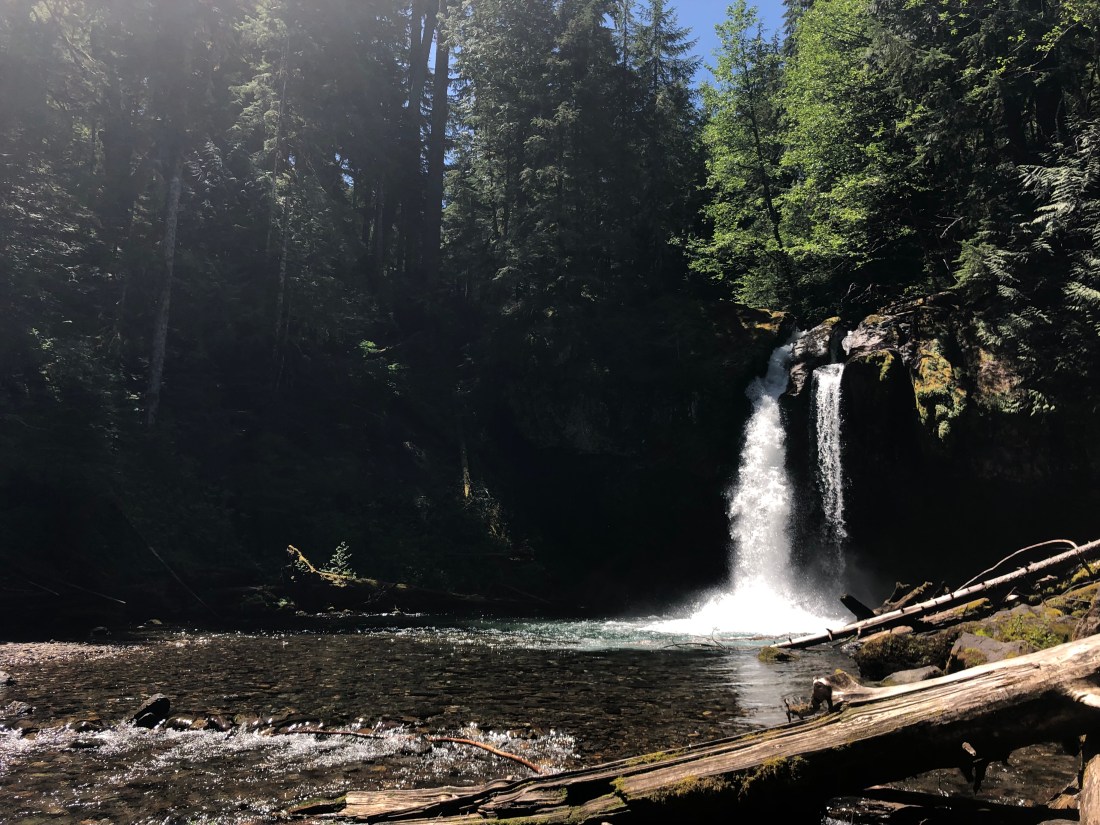
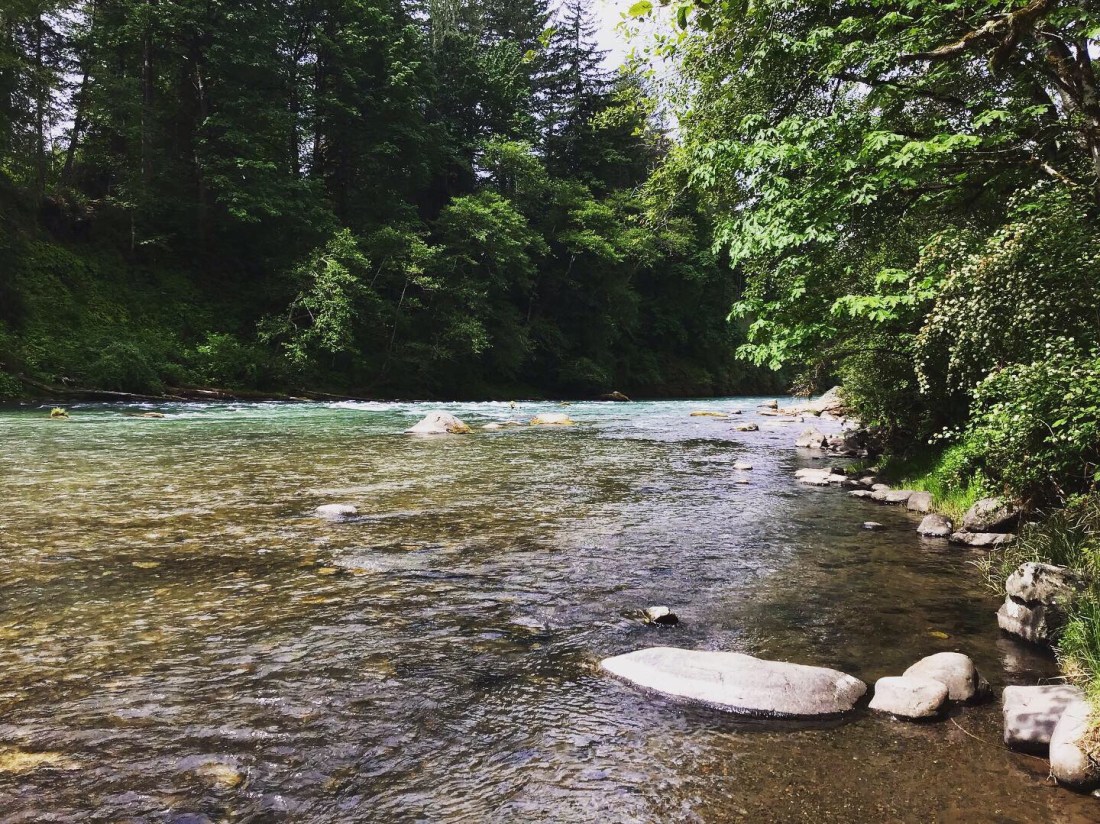
**photo taken at iron creek falls in Mt. St. Helens National Park, WA

Berkelandia — Oregon

What made Portland so spectacular is exactly what pushed me away. It’s not that I didn’t love it, I felt incredibly comfortable there, but that is exactly the opposite of what I am looking for on this trip. Aside from producing writing that I am proud of, considering my place in this world, and of course, getting to know myself, I want to take this time to break away from my “comfort zone”. In Portland, everything felt too familiar to be uncomfortable.

“This city is really just a big Berkeley.” My childhood friend smiled as she told me this and I remembered how much I love being close to her. Of course, even that felt familiar.

She took me to a few of her favorite places and I did some exploring of my own. I couldn’t believe how right she is—Portland even has many of the same features and attractions as Berkeley. For example:

Portland has a huge bookstore called “Powell’s City of Books”. They claim to be the largest new-and-used bookstore in the world!

Berkeley has Moe’s. A smaller, yet still quite impressive and renown new-and-used bookstore.

Portland has a huge rose garden, “The International Rose Test Garden”. It’s beautiful and surrounded by a huge park in a wealthy residential neighborhood.

Berkeley has a smaller, yet just as striking rose garden, also surrounded by a large park in a wealthy residential neighborhood.

And most notably in my mind, they both have similar cultures of people—a significant example of this being: the type who romantically lean against buildings holding an open book in one hand and coffee in the other, with a burning cigarette nestled loosely between two fingers allowing the coffee’s steam to twist into the rising smoke.

Yes, I actually saw somebody doing that.

I loved Portland. Despite the lack of diversity in Oregon, I think I could very comfortably live in Portland. But right now, I want to go where I think I can’t live. Because for better or worst, there’s nothing I love to do more than the things that I assume myself to be incapable of.

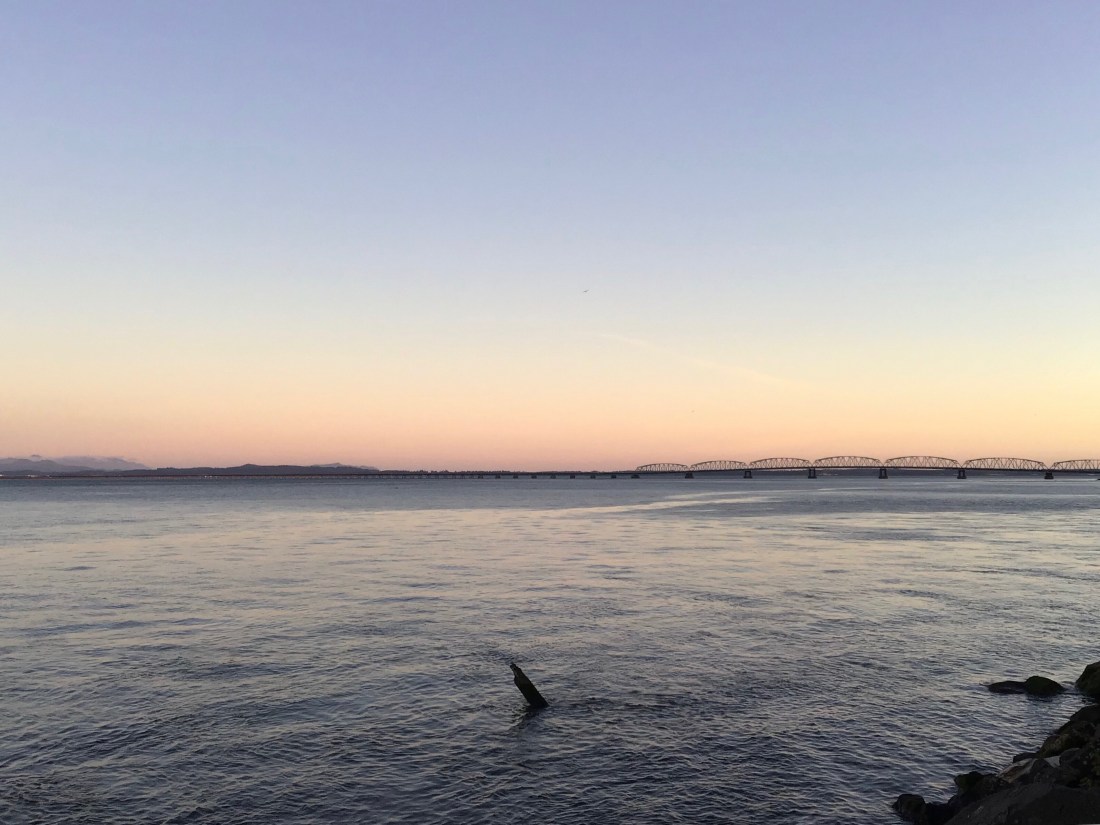
**Photo taken at Dismal Nitch, on my way from Portland to Olympia via the coast.

Self-Designated Bear Patrolman — Oregon

Leaving Bend was harder than I expected for two reasons:

1. While I was there, I had the opportunity to see a childhood friend whom I hadn’t seen since our 8th grade graduation in 2005. Fourteen years and yet, so little seems to have changed between us. We were never the closest of friends, but her tenacity and constant strive for joy inspired me even as a young child. There was a time in middle school when another friend and I had the audacity to say to her not-the-nicest-things on AOL instant messenger, a poor excuse for procrastination from our heavy load of homework. Within 48 hours, her mother had called our mothers and we both were given a talking to about being appropriate on the internet. Later, the thought of what we’d done gave me a tightness in my chest that I hadn’t yet learned to identify as anxiety. I don’t remember if I ever apologized to her, but I never did that again— say mean things to another person for no reason at all…is there ever a reason at all? This childhood friend is the first person I visited on this journey.

We promised each other we’d reconnect again soon, I promised myself I’d be better at staying in touch with the people I care about and also that I’d work on always keeping my promises. Goodbyes are never easy, even if they’re just “see you later”s.

2. Driving through the mountains towards Portland on Road 20 made my ears pop in spontaneous bursts of pain nearly as shocking and fierce as the jellyfish sting I got across my chest in the Mediterranean Sea last summer. I thought about turning around to make it stop, remembering that I’d forgotten to drive by the last living Blockbuster which happens to be in Bend. I’d planned to use my selfie stick for the first time to take a photo of myself in front of what soon may be an ancient ruin. However, the realization that my ears would pop just as much if I went back kept me moving toward my planned destination.

Road 20 snakes through the West Cascades along the Santiam and Williamette Rivers. Driving through the trees was beautiful but I felt like an invasive species, like I wasn’t supposed to be there. I thought about how there were once communities of trees living in the same places where the rubber wheels of my car were treading at high speeds, the evidence of their life in the surrounding forest but their own existence suffocated under the road which was paved for me to drive on. I thought about gentrification back home and how entire cities have had their souls extracted by what I imagine in my head as a looming dementor wearing a cloak that is not dark, but covered in app logos and glowing fluorescent like the tip of the new salesforce tower which is in my opinion, the most fascinating and accurate representation of the ways in which the tech industry has fucked the Bay Area.

As I drove along Road 20, I noticed that there were countless parks nestled in the mountains and along the rivers. I chose one to pull off at and found myself completely secluded in a small, open space where I could bring Vanna right up against a path leading into the water. I snapped a couple of photos of the river, mesmerized by the peace in its movement, when I suddenly heard footsteps coming behind me down the path from the road above. I looked up to see an older white man with a long grey beard, overalls, and grey hair peeking out from under a small black beanie.

“Are you a biologist?”

“No, I’m just taking pictures of the river. I’m on a trip.”

“Oh, around this time of year I see folks from the elementary schools collecting water samples. Some end of the year things they do.”

“How interesting.”

“Yup I live right across the road there.”

He motioned ambiguously towards the mountain behind us. I noticed the double holster on his hip holding both a pistol with a carved wood handle and a knife. I tried not to look at it while the man proceeded to give me a very brief history of his life, explaining that he is from Azusa, California. “East LA” he said, followed by a dramatic wink. I couldn’t tell if he was being facetious or not, especially when moments later he told me that too much liberalism is killing America.

He also explained that I was driving through bear territory and that bears are destroying both his property and his neighbor’s. “In Oregon,” he said, “if a wild animal is causing harm to your property— POW! It’s your right to shoot em’ dead! I walk through these woods a mile and a half in the morning and a mile and a half at night, I’m on bear patrol.”

I think the man could tell I was uncomfortable because he suddenly smiled, looked me earnestly in the eyes and said,

“You’re gonna have a great trip, kid. You will meet a lot of interesting people.” He extended the “lot” part of “a lot” in a sing-songy tone. As I drove back up the path to the road above, I wondered if the man was truly as harmless as he seemed. I was more curious than scared because although I knew he and I probably wouldn’t have agreed on many things, at the end of the day he just wanted to be able to keep the bears off of his land. He was nice to me, he shared parts of his life with me and he gave me interesting information about the place he calls home. Maybe we were both silently judging each other in our own heads, but it was clear that our differences were irrelevant in the moment and neither of us minded the other’s unexpected company.