
When choosing two social media platforms for this blog post I thought it would be most interesting if I considered platforms that I access regularly, but for unique and specific purposes. I ultimately settled on Pinterest, which I use exclusively for recipes and nail art inspiration, and WordPress, which I generally use exclusively to practice being comfortable with sharing my writing, but temporarily use for Misinformation and Society assignments. I realize that I may be jumping into hot water with the latter choice for this analysis, but my research shows that I probably have very little to worry about. It’s much more likely that I will be soaking in a hot spring in the middle of a PNW forest, my presence unknown by those who aren’t around to witness me being there.
A search on the Google for “WordPress misinformation policies” brought me to an article from their Policies and Safety page about reporting sites on the platform. Digging further, I found a page that goes into a deeper explanation of the way the GDPR (General Data Protection Regulation) may affect WordPress bloggers. This site links to a blog, which supposedly provides updates on privacy-related issues, but hasn’t done so since May of 2018. That being said, while privacy is important, I didn’t find any resources or attempts for protecting users from misinformation. WordPress’ focus seems to be protecting users’ privacy, and not their perception of reality. I was somewhat surprised to see this, but I also think that freedom of creative expression for writers is important. I follow the PEN America organization and admire Salman Rushdie’s fight against censorship; and yet, the freedom of an author, who clearly defines the genre of their writing (fiction, non-fiction, magical-realism, etc.), to share their stories, feels different than the freedom of @unvaxxedprincess2020 to share harmful conspiracies across social media. Also, social media is inarguably more accessible than banned books. I don’t know how reasonable (or possible) it is to comb through every single WordPress site for pieces of misinformation; but that doesn’t mean it isn’t necessary. This is why I imagine my critique on WordPress’ policies as more of a subtle soak, rather than a dangerous plunge into hot water. Even if I am spreading potentially harmful information about the site, it doesn’t seem likely that my writing would be noticed by anybody with the power to censor them.
Pinterest, on the other hand, seems to be making several efforts to prevent misinformation:
Pinterest isn’t a place for misinformation, disinformation, mal-information or the individuals or groups spreading or creating it. We remove or limit distribution of false or misleading content that may harm Pinners’ or the public’s well-being, safety or trust”
Pinterest Community Guidelines
They also provide a transparency report which details their review process of any and all media that may violate community guidelines.
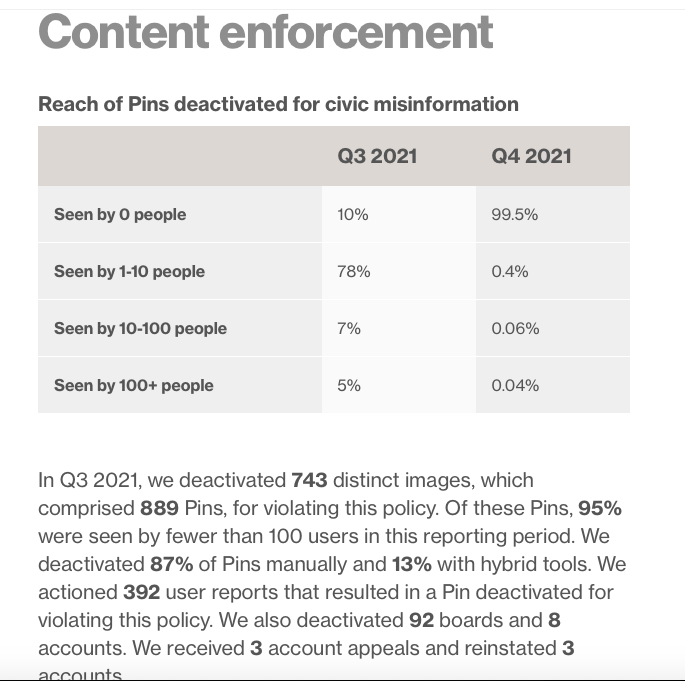
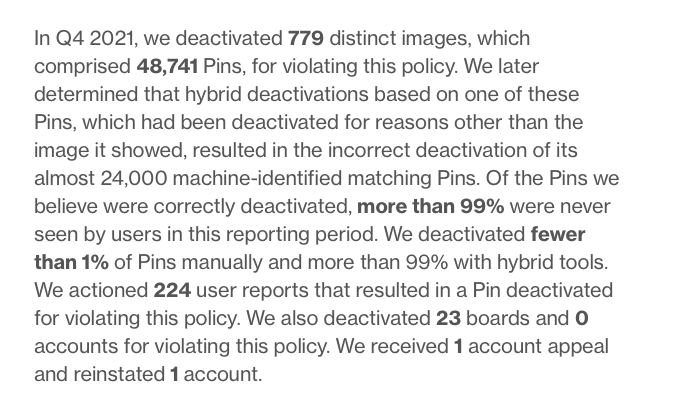
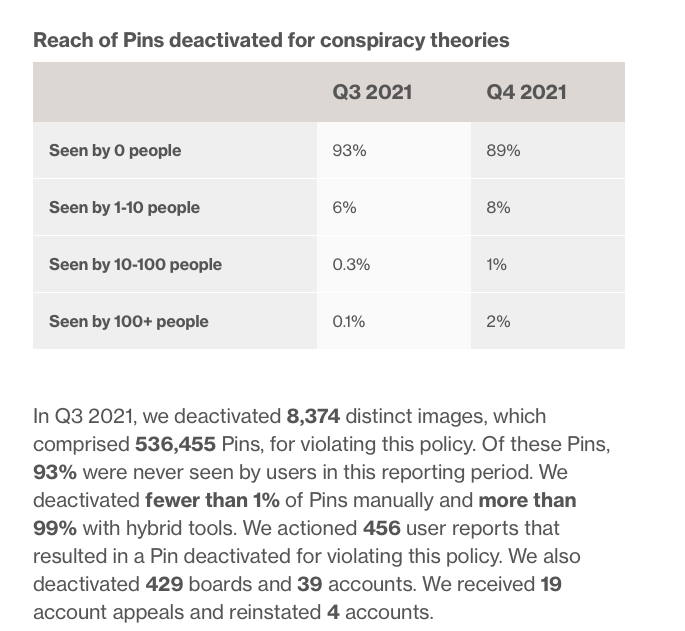
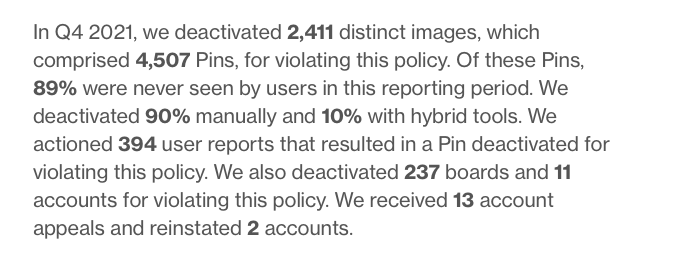
As you can see from the chaotic layout of photos above, Pinterest seems to be extremely transparent and as thorough as possible in prevention the spread of misinformation on their platform. They even share with users the stricter guidelines to which advertisers must comply.
Overall, my research has shown that WordPress could be making more efforts to curb the spread of misinformation. In addition to their user-reporting services, they could use an automated tool to comb through posts and flag those with certain hashtags, which may suggest misinformative content. This tool could be followed up with a manual review of flagged posts. Although there would be an incredible cost associated with hiring the necessarily large staff that would be needed to perform the manual reviews, the PR has incredible potential in this age of misinformation. Considering the way celebrities and users loudly separated from Spotify after the whole Joe Rogan fiasco, I think that many people would praise WordPress for increasing their efforts, possibly flocking to the platform. That being said, while many people write something (even if it’s as minimal as a datebook entry) on a day-to-day basis, blogging is a bit more niche. Maybe WordPress is more worried about maintaining a “safe” space for writers, with the knowledge that their service doesn’t have nearly as broad of an appeal as other social media platforms like tiktok and instagram.
Pinterest seems to be doing a pretty solid job, so I’m just going to recommend that they keep the recipes flowing and the ads a’blowing…away. Because I hate them. Now, please enjoy the ads below this post *insert upside-down smiley face emoticon here*.
 Wandering Woman